Who We Are
GamAid Zambia Initiative is a registered non-profit organisation (NGO) founded in 2023 to address the growing challenge of gambling addiction and gambling related harm in Zambia.
GamAid is Zambia’s leading organisation dedicated exclusively to gambling addiction prevention, treatment, financial recovery, research, and institutional capacity building. We operate at both individual and systems level, supporting affected individuals and families while strengthening the capacity of institutions, workplaces, and communities to respond effectively to gambling related harm.
Our work integrates mental health services, financial counselling, peer support, research, public education, and policy aligned engagement, positioning GamAid as a trusted partner to government ministries, betting operators, universities, financial institutions, NGOs, and community organisations across Zambia.
About GamAid Zambia
GamAid was established in response to a critical gap in Zambia’s mental health and social support landscape: the absence of specialised, structured services focused specifically on gambling addiction and its far reaching consequences.
Gambling addiction affects not only individuals, but also families, finances, workplaces, academic performance, and community wellbeing. GamAid approaches gambling addiction as a complex mental health, financial, and socio economic issue, requiring coordinated, professional, and compassionate responses.
Since its establishment, GamAid has grown from an awareness focused initiative into a nationally recognised organisation delivering direct services, professional training, institutional partnerships, research, and multi stakeholder engagement across Zambia.
Vision Statement
To create a Zambia where individuals, families, and communities thrive free from the harms of gambling addiction.
Mission Statement
To provide comprehensive, evidence informed prevention, treatment, recovery, financial rehabilitation, and research driven services for individuals and families affected by gambling addiction, while strengthening institutions and communities to respond effectively and responsibly.
Objectives
- Destigmatization: Challenge societal stigma surrounding gambling addiction to encourage individuals to seek help without fear of judgment or shame.
- Education: Provide comprehensive information about the signs, symptoms, and consequences of gambling addiction to increase public awareness and understanding.
- Offer a safe and supportive environment where individuals can explore the underlying factors contributing to their addiction and develop effective coping strategies.
- Provide personalized rehabilitation programs tailored to meet the unique needs of each individual struggling with gambling addiction.
- Empower clients to rebuild their lives by fostering personal growth, self-awareness, and resilience.
- Promote long-term recovery through ongoing support, education, and relapse prevention strategies.
Our Approach
GamAid operates through a holistic, multidisciplinary model built on five core pillars:
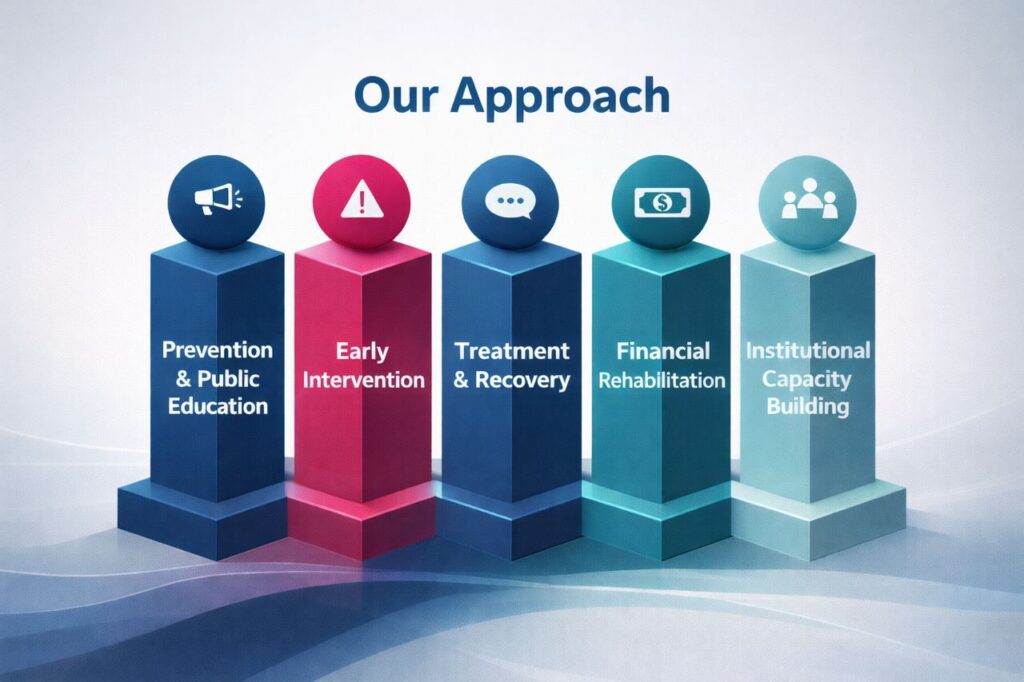
Prevention & Public Education
Reducing harm through early awareness, education, and responsible gambling messaging.
Early Intervention
Identifying risk early and providing timely support before harm escalates.
Treatment & Recovery
Delivering structured therapeutic and peer based recovery services for individuals, couples, and families.
Financial Rehabilitation
Addressing gambling related debt and financial harm as a core and essential component of recovery.
Institutional Capacity Building
Training organisations, workplaces, and institutions to identify, respond to, and prevent gambling related harm.
All GamAid programmes are guided by ongoing monitoring, evaluation, and research, ensuring services remain relevant, effective, and responsive to emerging trends in gambling addiction in Zambia.

Values
Compassion: We provide empathetic, non judgmental support to all clients and partners.
Integrity: We uphold the highest ethical and professional standards in all our work.
Empowerment: We support individuals and institutions to take ownership of positive change.
Collaboration: We believe lasting impact is achieved through partnership and shared responsibility.
Respect: We honour the dignity, autonomy, and diversity of every individual we serve.
Innovation: We continuously strengthen our work through learning, research, and best practice.